
Displaying 938 results

This lesson provides information on developing data management plans (DMPs), including an overview of how DMPs contribute to effective research efforts, as well as specific development resources and DMP examples.
Difficulty level: Beginner
Duration: 01:01:55
Speaker: : James Doiran

In this session, participants will take an in-depth look at the newly launched DMP Assistant 2.0, including all of its enhanced key features for both end-users and institutional administrators, as well as a brief look at the future of the platform.
Difficulty level: Beginner
Duration: 01:03:51
Speaker: : Robyn Nicholson

This lecture provides reviews some standards for project management and organization, including motivation from the view of the FAIR principles and improved reproducibility.
Difficulty level: Beginner
Duration: 01:08:34
Speaker: : Elizabeth DuPre

Course:
This lesson provides a conceptual overview of the rudiments of machine learning, including its bases in traditional statistics and the types of questions it might be applied to. The lesson was presented in the context of the BrainHack School 2020.
Difficulty level: Beginner
Duration: 01:22:18
Speaker: : Estefany Suárez

Course:
This lesson provides a hands-on, Jupyter-notebook-based tutorial to apply machine learning in Python to brain-imaging data.
Difficulty level: Beginner
Duration: 02:13:53
Speaker: : Jake Vogel
Course:
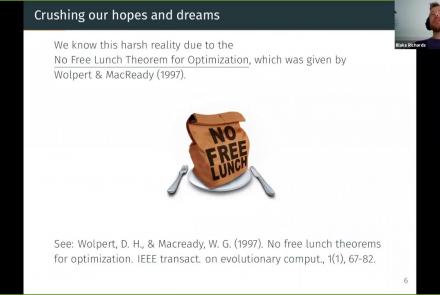
This lesson gives an introduction to deep learning, with a perspective via inductive biases and emphasis on correctly matching deep learning to the right research questions.
Difficulty level: Beginner
Duration: 01:35:12
Speaker: : Blake Richards

Course:
This lesson presents advanced machine learning algorithms for neuroimaging, while addressing some real-world considerations related to data size and type.
Difficulty level: Beginner
Duration: 01:17:14
Speaker: : Gael Varoquaux
In February 2020, the Canadian government published its "Roadmap for Open Science" to provide overarching principles and recommendations to guide Open Science activities in federally funded scientific research. It outlines broad guidelines for making science in Canada open to all while respecting privacy, security, ethical considerations, and appropriate intellectual property protection.
Difficulty level: Beginner
Duration:
Speaker: :
The FOSTER portal has produced a number of guides to help implement Open Science practices in daily workflows, including The Open Science Training Handbook. It provides many basic definitions, concepts, and principles that are key components of open science, as well as general guidance for developing and implementing these practices in one's own research environments.
Difficulty level: Beginner
Duration:
Speaker: :

This lesson provides a quick tour of some data repositories and how to download and manipulate data from them.
Difficulty level: Beginner
Duration: 00:49:06
Speaker: : Sebastian Urchs

Course:
This lesson gives an introduction to high-performance computing with the Compute Canada network, first providing an overview of use cases for HPC and then a hands-on tutorial. Though some examples might seem specific to the Calcul Québec, all computing clusters in the Compute Canada network share the same software modules and environments.
Difficulty level: Beginner
Duration: 02:49:34
Speaker: : Félix-Antoine Fortin

Course:
As a part of NeuroHackademy 2020, this lecture delves into cloud computing, focusing on Amazon Web Services.
Difficulty level: Beginner
Duration: 01:43:59
Speaker: : Tara Madhyastha, Andrew Crabb, Ariel Rokem

This lesson provides a short overview of the main features of the Canadian Open Neuroscience Platform (CONP) Portal, a web interface that facilitates open science for the neuroscience community by simplifying global access to and sharing of datasets and tools. The Portal internalizes the typical cycle of a research project, beginning with data acquisition, followed by data processing with published tools, and ultimately the publication of results with a link to the original dataset.
Difficulty level: Beginner
Duration: 14:03
Speaker: : Samir Das, Tristan Glatard

Course:
This talk presents an overview of CBRAIN, a web-based platform that allows neuroscientists to perform computationally intensive data analyses by connecting them to high-performance computing facilities across Canada and around the world.
Difficulty level: Beginner
Duration: 56:07
Speaker: : Shawn Brown
Course:
Open Brain Consent is an international initiative aiming to address the challenge of creating participant consent language that will promote the open sharing of data, protect participant privacy, and conform to legal norms and institutional review boards.
Open Brain Consent addresses the aforementioned difficulties in neuroscience research with human participants by collecting:
- widely acceptable consent forms (with various translations) allowing deposition of anonymized data to public data archives
- collection of tools/pipelines to help anonymization of neuroimaging data making it ready for sharing
Difficulty level: Beginner
Duration:
Speaker: :

Course:
This lesson from freeCodeCamp introduces Scikit-learn, the most widely used machine learning Python library.
Difficulty level: Beginner
Duration: 02:09:22
Speaker: :
Course:
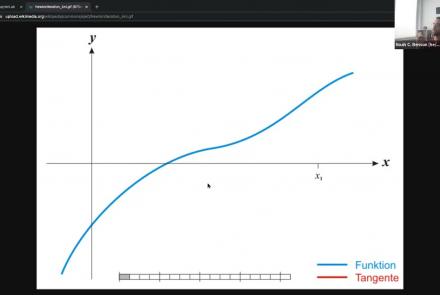
As a part of NeuroHackademy 2021, Noah Benson gives an introduction to Pytorch, one of the two most common software packages for deep learning applications to the neurosciences.
Difficulty level: Beginner
Duration: 00:50:40
Speaker: :

Serving as good refresher, this lesson explains the maths and logic concepts that are important for programmers to understand, including sets, propositional logic, conditional statements, and more.
This compilation is courtesy of freeCodeCamp.
Difficulty level: Beginner
Duration: 1:00:07
Speaker: : Shawn Grooms

This lesson provides a useful refresher which will facilitate the use of Matlab, Octave, and various matrix-manipulation and machine-learning software.
This lesson was created by RootMath.
Difficulty level: Beginner
Duration: 1:21:30
Speaker: :

Course:
This lesson provides a comprehensive introduction to the command line and 50 popular Linux commands. This is a long introduction (nearly 5 hours), but well worth it if you are going to spend a good part of your career working from a terminal, which is likely if you are interested in flexibility, power, and reproducibility in neuroscience research. This lesson is courtesy of freeCodeCamp.
Difficulty level: Beginner
Duration: 5:00:16
Speaker: : Colt Steele