
Displaying 938 results

This lecture presents selected theories of ethics as applied to questions raised by the Human Brain Project.
Difficulty level: Beginner
Duration: 38:49
Speaker: : Christine Mitchell

The HBP as an ICT flagship project crucially relies on ICT and will contribute important input into the development of new computing principles and artefacts. Individuals working on the HBP should therefore be aware of the long history of ethical issues discussed in computing. This lessson provides an overview of the most widely discussed ethical issues in computing and demonstrate that privacy and data protection are by no means the only issue worth worrying about.
Difficulty level: Beginner
Duration: 46:12
Speaker: : Bernd Stahl

This lecture explores two questions regarding the ethics of robot development and use. Firstly, the increasingly urgent question of the ethical use of robots: are there particular applications of robots that should be proscribed, in eldercare, or surveillance, or combat? Secondly, the talk deals with the longer-term question of whether intelligent robots themselves could or should be ethical.
Difficulty level: Beginner
Duration: 31:35
Speaker: : Alan Winfield

In this lesson, attendees will learn about the challenges involved in working with life scientists to enhance their capacity for understanding, and taking responsibility for, the social implications of their research.
Difficulty level: Beginner
Duration: 50:15
Speaker: : Nikolas Rose

This lecture considers some of the key social and ethical issues raised by the ‘big brain projects’ currently under way in Europe, the USA, China, Japan, and many other regions.
Difficulty level: Beginner
Duration: 53:08
Speaker: : Nikolas Rose

This lecture aims to give an introduction and overview of the dual-use challenge as it applies to neuroscience today and will apply in coming decades.
Difficulty level: Beginner
Duration: 40:11
Speaker: : Malcolm Dando
What is ethics in biomedical research? In this case, ethics refers to how we think we can use animals in biomedical research and what we gain from the experimental setup of those investigations. We will talk about “a common set of values” and how 3R engagement can make a difference in experimental procedures, results, and scientific publications of the future.
Difficulty level: Beginner
Duration: 51:04
Speaker: : Viveka Hillegaart

This lecture discusses how artificial intelligence (AI) is presented in policy documents as a disruptive and transformative technology. The talk will further elaborate on how policy-makers frame social risks and opportunities associated with AI in areas such as employment, business, healthcare, education, and military.
Difficulty level: Beginner
Duration: 55:13
Speaker: : Rafael Frias

This lesson provides a high-level overview of the ethical issues related to data use in such a large, complex, and multi-national research initiative as the HBP.
Difficulty level: Beginner
Duration: 58:18
Speaker: : Manuel Guerrero

This lecture explores the morally relevant aspects of cognitive enhancement, with special emphasis on safety, fairness, authenticity, and coercion (peer pressure). It will also touch upon the less-widely discussed issue of moral status and cognitive function.
Difficulty level: Beginner
Duration: 57:53
Speaker: : Sebastian Porsdam Mann

This talk attempts to answer the question “how intelligent are present-day intelligent robots?” and describe efforts to design robots that are not only more intelligent but also have a sense of self. But if we should be successful in designing such robots, would they think like animals, or even humans? And what are the realistic prospects for future (sentient) robots as smart as humans?
Difficulty level: Beginner
Duration: 53:27
Speaker: : Alan Winfield

This tutorial demonstrates how to use the image processing pipeline with the HBP collab.
Difficulty level: Beginner
Duration: 5:55
Speaker: : M. Schirner, P. Triebkorn, P. Ritter

This tutorial provides instruction on how to use the TVB-NEST toolbox co-simulation in HBP collab.
Difficulty level: Beginner
Duration: 3:11

In this tutorial, you will learn how to use TVB-NEST toolbox on your local computer.
Difficulty level: Beginner
Duration: 2:16
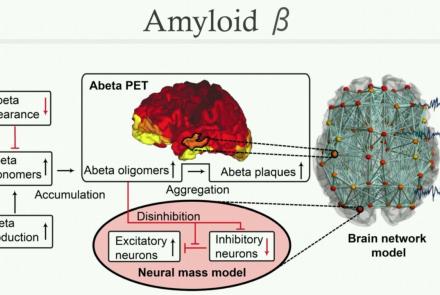
This tutorial provides instruction on how to perform multi-scale simulation of Alzheimer's disease on The Virtual Brain Simulation Platform.
Difficulty level: Beginner
Duration: 29:08
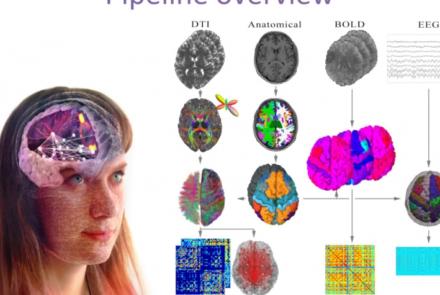
This presentation accompanies the paper entitled: An automated pipeline for constructing personalized virtual brains from multimodal neuroimaging data (see link below to download publication).
Difficulty level: Beginner
Duration: 4:56

This lesson consists of a supplementary video for the publication: Inferring multi-scale neural mechanisms with brain network modelling.
Difficulty level: Beginner
Duration: 3:06

Course:
Brief introduction to Research Resource Identifiers (RRIDs), persistent and unique identifiers for referencing a research resource.
Difficulty level: Beginner
Duration: 1:30
Speaker: : Anita Bandrowski

Research Resource Identifiers (RRIDs) are ID numbers assigned to help researchers cite key resources (e.g., antibodies, model organisms, and software projects) in biomedical literature to improve the transparency of research methods.
Difficulty level: Beginner
Duration: 1:01:36
Speaker: : Maryann Martone

Course:
The Brain Imaging Data Structure (BIDS) is a standard prescribing a formal way to name and organize MRI data and metadata in a file system that simplifies communication and collaboration between users and enables easier data validation and software development through using consistent paths and naming for data files.
Difficulty level: Beginner
Duration: 0:56
Speaker: : Jean-Babtiste Poline