
Lesson type
Difficulty level
Course:
The goal of computational modeling in behavioral and psychological science is using mathematical models to characterize behavioral (or neural) data. Over the past decade, this practice has revolutionized social psychological science (and neuroscience) by allowing researchers to formalize theories as constrained mathematical models and test specific hypotheses to explain unobservable aspects of complex social cognitive processes and behaviors. This course is composed of 4 modules in the format of Jupyter Notebooks. This course comprises lecture-based, discussion-based, and lab-based instruction. At least one-third of class sessions will be hands-on. We will discuss relevant book chapters and journal articles, and work with simulated and real data using the Python programming language (no prior programming experience necessary) as we survey some selected areas of research at the intersection of computational modeling and social behavior. These selected topics will span a broad set of social psychological abilities including (1) learning from and for others, (2) learning about others, and (3) social influence on decision-making and mental states. Rhoads, S. A. & Gan, L. (2022). Computational models of human social behavior and neuroscience - An open educational course and Jupyter Book to advance computational training. Journal of Open Source Education, 5(47), 146. https://doi.org/10.21105/jose.00146
Difficulty level: Intermediate
Duration:
Speaker: :

This lecture provides an introduction to the study of eye-tracking in humans.
Difficulty level: Beginner
Duration: 34:05
Speaker: : Ulrich Ettinger

Course:
From the retina to the superior colliculus, the lateral geniculate nucleus into primary visual cortex and beyond, this lecture gives a tour of the mammalian visual system highlighting the Nobel-prize winning discoveries of Hubel & Wiesel.
Difficulty level: Beginner
Duration: 56:31
Speaker: : Clay Reid

Course:
From Universal Turing Machines to McCulloch-Pitts and Hopfield associative memory networks, this lecture explains what is meant by computation.
Difficulty level: Beginner
Duration: 55:27
Speaker: : Christof Koch

Course:
In an overview of the structure of the mammalian neocortex, this lecture explains how the mammalian cortex is organized in a hierarchy, describing the columnar principle and canonical microcircuits.
Difficulty level: Beginner
Duration: 1:02:02
Speaker: : Clay Reid

Course:
The retina has 60 different types of neurons. What are their functions? This lecture explores the definition of cell types and their functions in the mammalian retina.
Difficulty level: Beginner
Duration: 1:07:19
Speaker: : Christof Koch

Course:
Optical imaging offers a look inside the working brain. This lecture takes a look at orientation and ocular dominance columns in the visual cortex, and shows how they can be viewed with calcium imaging.
Difficulty level: Beginner
Duration: 26:17
Speaker: : Clay Reid

Course:
Functional imaging has led to the discovery of a plethora of visual cortical regions. This lecture introduces functional imaging techniques and their teachings about the visual cortex.
Difficulty level: Beginner
Duration: 1:07:03
Speaker: : Clay Reid
Course:
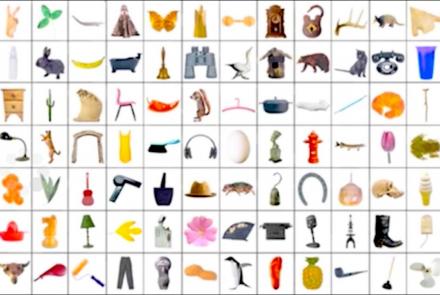
This lecture explains these ideas and explores the task of characterizing neuronal response properties using information theory.
Difficulty level: Beginner
Duration: 1:01:18
Speaker: : Christof Koch

Course:
What is color? This lecture explores how color is "made" in the brain and variations of color perception including trichromacy, color blindness in men, tetrachromatic vision in women, and genetic engineering of color perception.
Difficulty level: Beginner
Duration: 1:11:07
Speaker: : Christof Koch

Course:
How does the brain learn? This lecture discusses the roles of development and adult plasticity in shaping functional connectivity.
Difficulty level: Beginner
Duration: 1:08:45
Speaker: : Clay Reid

Course:
What is the difference between attention and consciousness? This lecture describes the scientific meaning of consciousness, journeys on the search for neural correlates of visual consciousness, and explores the possibility of consciousness in other beings and even non-biological structures.
Difficulty level: Beginner
Duration: 1:10:01
Speaker: : Christof Koch

Course:
This primer on optogenetics primer discusses how to manipulate neuronal populations with light at millisecond resolution and offers possible applications such as curing the blind and "playing the piano" with cortical neurons.
Difficulty level: Beginner
Duration: 59:06
Speaker: : Clay Reid

This short talk addresses how to use VisuAlign to make nonlinear adjustments to 2D-to-3D registrations generated by QuickNII.
Difficulty level: Beginner
Duration: 08:50
Speaker: : Maja Puchades

This talk aims to provide guidance regarding the myriad labelling methods for histological image data.
Difficulty level: Beginner
Duration: 35:20
Speaker: : Sharon Yates

This lesson provides a cross-species comparison of neuron types in the rat and mouse brain.
Difficulty level: Beginner
Duration: 17:16
Speaker: : Ingvild Elise Bjerke

This lecture concludes the course with an outline of future directions of the field of neuroscientific research data integration.
Difficulty level: Beginner
Duration: 09:49
Speaker: : Jan G. Bjaalie

This is a hands-on tutorial on PLINK, the open source whole genome association analysis toolset. The aims of this tutorial are to teach users how to perform basic quality control on genetic datasets, as well as to identify and understand GWAS summary statistics.
Difficulty level: Intermediate
Duration: 1:27:18
Speaker: : Dan Felsky

This lesson is an overview of transcriptomics, from fundamental concepts of the central dogma and RNA sequencing at the single-cell level, to how genetic expression underlies diversity in cell phenotypes.
Difficulty level: Intermediate
Duration: 1:29:08
Speaker: : Shreejoy Tripathy
In this lesson, you will learn about data management within the Open Data Commons (ODC) framework, and in particular, how Spinal Cord Injury (SCI) data is stored, shared, and published. You will also hear about Frictionless Data, an open-source toolkit aimed at simplifying the data experience.
Difficulty level: Beginner
Duration: 19:10
Speaker: : Jeff Grethe & Sourabh Prakash