
Below you will find the latest courses. Please search or select the courses based on the below filters.

Bayesian Models of Learning and Integration of Neuroimaging Data
Krembil Centre for NeuroinformaticsBayesian inference (using prior knowledge to generate more accurate predictions about future events or outcomes) has become increasingly applied to the fields of neuroscience and neuroinformatics. In this course, participants are taught how Bayesian statistics may be used to build cognitive models of processes like learning or perception. This course also offers theoretical and practical instruction on dynamic causal modeling as applied to fMRI and EEG data.
Population-Based Data Resources & Integrative Research Methods
Krembil Centre for NeuroinformaticsAs research methods and experimental technologies become ever more sophisticated, the amount of health-related data per individual which has become accessible is vast, giving rise to a corresponding need for cross-domain data integration, whole-person modelling, and improved precision medicine. This course provides lessons describing state of the art methods and repositories, as well as a tutorial on computational methods for data integration.

Cellular Mechanisms of Brain Function
EPFLThis course, arranged by EPFL and also available as a MOOC on edX, aims for a mechanistic description of mammalian brain function at the level of individual nerve cells and their synaptic interactions.

Introduction to Neurodata Without Borders (NWB) for Python Users II
NWB Core Development TeamThe Neurodata Without Borders: Neurophysiology project (NWB:N, https://www.nwb.org/) is an effort to standardize the description and storage of neurophysiology data and metadata. NWB enables data sharing and reuse and reduces the energy barrier to applying data analytics both within and across labs. Several laboratories, including the Allen Institute for Brain Science, have wholeheartedly adopted NWB.
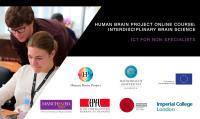
Introduction to Information and Communications Technology (ICT) for Non-Specialists
HBP Education Programme“Computational Thinking“ refers to a mindset or set of tools used by computational or ICT specialists to describe their work. This course is intended for people outside of the ICT field to allow students to understand the way that computer specialists analyse problems and to introduce students to the basic terminology of the field.

INCF Short Course: Introduction to Neuroinformatics
INCFThe emergence of data-intensive science creates a demand for neuroscience educators worldwide to deliver better neuroinformatics education and training in order to raise a generation of modern neuroscientists with FAIR capabilities, awareness of the value of standards and best practices, knowledge in dealing with big datasets, and the ability to integrate knowledge over multiple scales and methods.

Module 5: Calcium Imaging
Mike X. CohenIn this course, you will learn about working with calcium-imaging data, including image processing to remove background "blur", identifying cells based on threshold spatial contiguity, time-series filtering, and principal component analysis (PCA). The MATLAB code shows data animations, capabilities of the image processing toolbox, and PCA.

INCF Assembly 2022 - Day 2 Sessions
INCFSessions from the INCF Neuroinformatics Assembly 2022 day 2.

TVB Made Easy
The Virtual BrainIn this short series of lectures, participants will take a look at articles using TVB in a clinical context. Specifically, participants will see how TVB can help to predict recovery after stroke and how individual epileptic seizures are simulated. The course lecturers will briefly describe the methods used and results achieved in the articles.
Module 2: EEG
Mike X. CohenIn this module, you will work with human EEG data recorded during a steady-state visual evoked potential study (SSVEP, aka flicker). You will learn about spectral analysis, alpha activity, and topographical mapping. The MATLAB code introduces functions, sorting, and correlation analysis.
Fundamental Methods for Single-Cell Transcriptome Analysis
Krembil Centre for NeuroinformaticsThis course, consisting of one lecture and two workshops, is presented by the Computational Genomics Lab at the Centre for Addiction and Mental Health and University of Toronto. The lecture deals with single-cell and bulk level transciptomics, while the two hands-on workshops introduce users to transcriptomic data types (e.g., RNAseq) and how to perform analyses in specific use cases (e.g., cellular changes in major depression).

Open Science: Practices and Policies
These lessons give an overview of the principles underpinning the objectives, policies, and practice of Open Science, including several representative policy documents that will be increasingly relevant to neuroscience research.

Introduction to Neurodata Without Borders (NWB) for MATLAB Users II
NWB Core Development TeamThe Neurodata Without Borders: Neurophysiology project (NWB, https://www.nwb.org/) is an effort to standardize the description and storage of neurophysiology data and metadata. NWB enables data sharing and reuse and reduces the energy-barrier to applying data analytics both within and across labs. Several laboratories, including the Allen Institute for Brain Science, have wholeheartedly adopted NWB.

Session 5: Infrastructure for Sensitive Data
INCFThis course consists of a three-part session from the second day of INCF's Neuroinformatics Assembly 2023. The lessons describe various on-going efforts within the fields of neuroinformatics and clinical neuroscience to adjust to the increasingly vast volumes of brain data being collected and stored.

INCF Assembly 2022 - Day 3 Sessions
INCFSessions from the INCF Neuroinformatics Assembly 2022 Day 3.

OpenNeuro.org Tutorials
OpenNeuro.orgThis course consists of brief tutorials on OpenNeuro.org, a free and open platform for analyzing and sharing neuroimaging data. During this course, you will learn how to deal with your neuroscientific datasets using OpenNeuro.org for operations such as uploading and version control, as well as how to analyze and share your data.
Module 3: Computational Models
Mike X. CohenThis module introduces computational neuroscience by simulating neurons according to the AdEx model. You will learn about generative modeling, dynamical systems, and F-I curves. The MATLAB code introduces live scripts and functions.