
Lesson type
Difficulty level

This talks discusses data sharing in the context of dementia. It explains why data sharing in dementia is important, how data is usually shared in the field and illustrates two examples: the Netherlands Consortium Dementia cohorts and the European Platform for Neurodegenerative Diseases.
Difficulty level: Intermediate
Duration: 21:21
Speaker: : Pieter Jelle Visser

The Medical Informatics Platform (MIP) Dementia had been installed in several memory clinics across Europe allowing them to federate their real-world databases. Research open access databases had also been integrated such as ADNI (Alzheimer’s Dementia Neuroimaging Initiative), reaching a cumulative case load of more than 5,000 patients (major cognitive disorder due to Alzheimer’s disease, other major cognitive disorder, minor cognitive disorder, controls). The statistic and machine learning tools implemented in the MIP allowed researchers to conduct easily federated analyses among Italian memory clinics (Redolfi et al. 2020) and also across borders between the French (Lille), the Swiss (Lausanne) and the Italian (Brescia) datasets.
Difficulty level: Intermediate
Duration: 16:44
Speaker: : Mélanie Leroy

The number of patients with dementia is estimated to increase given the aging population. This will lead to a number of challenges in the future in terms of diagnosis and care for patients with dementia. To meet these needs such as early diagnsosis and development of prognostic biomarkers, large datasets, such as the federated datasets on dementia. The EAN Dementia and cognitive disorders scientific panel can play an important role as coordinator and connecting panel members who wish to participate in e.g. consortia.
Difficulty level: Intermediate
Duration: 15:39
Speaker: : Kristian Steen Frederiksen
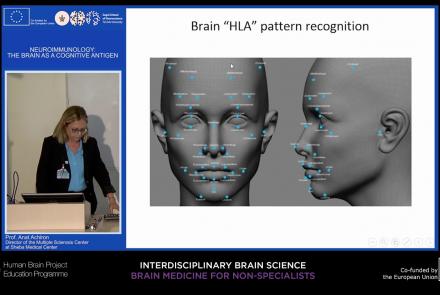
This lecture focuses on how the immune system can target and attack the nervous system to produce autoimmune responses that may result in diseases such as multiple sclerosis, neuromyelitis, and lupus cerebritis manifested by motor, sensory, and cognitive impairments. Despite the fact that the brain is an immune-privileged site, autoreactive lymphocytes producing proinflammatory cytokines can cause active brain inflammation, leading to myelin and axonal loss.
Difficulty level: Beginner
Duration: 37:36
Speaker: : Anat Achiron

This lecture discusses the the importance and need for data sharing in clinical neuroscience.
Difficulty level: Intermediate
Duration: 25:22
Speaker: : Thomas Berger

This lecture gives insights into the Medical Informatics Platform's current and future data privacy model.
Difficulty level: Intermediate
Duration: 17:29
Speaker: : Yannis Ioannidis

This lecture gives an overview on the European Health Dataspace.
Difficulty level: Intermediate
Duration: 26:33
Speaker: : Licino Kustra Mano

This is a tutorial on designing a Bayesian inference model to map belief trajectories, with emphasis on gaining familiarity with Hierarchical Gaussian Filters (HGFs).
This lesson corresponds to slides 65-90 of the PDF below.
Difficulty level: Intermediate
Duration: 1:15:04
Speaker: : Daniel Hauke

This lesson contains the first part of the lecture Data Science and Reproducibility. You will learn about the development of data science and what the term currently encompasses, as well as how neuroscience and data science intersect.
Difficulty level: Beginner
Duration: 32:18
Speaker: : Ariel Rokem

In this second part of the lecture Data Science and Reproducibility, you will learn how to apply the awareness of the intersection between neuroscience and data science (discussed in part one) to an understanding of the current reproducibility crisis in biomedical science and neuroscience.
Difficulty level: Beginner
Duration: 31:31
Speaker: : Ashley Juavinett

In this lesson, you will learn about the current challenges facing the integration of machine learning and neuroscience.
Difficulty level: Beginner
Duration: 5:42
Speaker: : Dan Goodman

Course:
JupyterHub is a simple, highly extensible, multi-user system for managing per-user Jupyter Notebook servers, designed for research groups or classes. This lecture covers deploying JupyterHub on a single server, as well as deploying with Docker using GitHub for authentication.
Difficulty level: Beginner
Duration: 1:36:27
Speaker: : Thomas Kluyver

Course:
This demonstration walks through how to import your data into MATLAB.
Difficulty level: Beginner
Duration: 6:10
Speaker: : MATLAB®

Course:
This lesson provides instruction regarding the various factors one must consider when preprocessing data, preparing it for statistical exploration and analyses.
Difficulty level: Beginner
Duration: 15:10
Speaker: : MATLAB®

Course:
This tutorial outlines, step by step, how to perform analysis by group and how to do change-point detection.
Difficulty level: Beginner
Duration: 2:49
Speaker: : MATLAB®

Course:
This tutorial walks through several common methods for visualizing your data in different ways depending on your data type.
Difficulty level: Beginner
Duration: 6:10
Speaker: : MATLAB®

Course:
This tutorial illustrates several ways to approach predictive modeling and machine learning with MATLAB.
Difficulty level: Beginner
Duration: 6:27
Speaker: : MATLAB®

Course:
This brief tutorial goes over how you can easily work with big data as you would with any size of data.
Difficulty level: Beginner
Duration: 3:55
Speaker: : MATLAB®

Course:
In this tutorial, you will learn how to deploy your models outside of your local MATLAB environment, enabling wider sharing and collaboration.
Difficulty level: Beginner
Duration: 3:52
Speaker: : MATLAB®

Course:
This lesson provides a brief overview of the Python programming language, with an emphasis on tools relevant to data scientists.
Difficulty level: Beginner
Duration: 1:16:36
Speaker: : Tal Yarkoni