
Lesson type
Difficulty level

This lecture covers advanced concept of energy based models. The lecture is a part of the Advanced energy based models modules of the the Deep Learning Course at NYU's Center for Data Science. Prerequisites for this course include: Energy-Based Models I, Energy-Based Models II, Energy-Based Models III, and an Introduction to Data Science or a Graduate Level Machine Learning course.
Difficulty level: Beginner
Duration: 56:41
Speaker: : Alfredo Canziani
Course:
This lesson gives an introduction to deep learning, with a perspective via inductive biases and emphasis on correctly matching deep learning to the right research questions.
Difficulty level: Beginner
Duration: 01:35:12
Speaker: : Blake Richards

Course:
As a part of NeuroHackademy 2021, Noah Benson gives an introduction to Pytorch, one of the two most common software packages for deep learning applications to the neurosciences.
Difficulty level: Beginner
Duration: 00:50:40
Speaker: :

Course:
Learn how to use TensorFlow 2.0 in this full tutorial for beginners. This course is designed for Python programmers looking to enhance their knowledge and skills in machine learning and artificial intelligence.
Throughout the 8 modules in this course you will learn about fundamental concepts and methods in ML & AI like core learning algorithms, deep learning with neural networks, computer vision with convolutional neural networks, natural language processing with recurrent neural networks, and reinforcement learning.
Difficulty level: Beginner
Duration: 06:52:07
Speaker: :

Course:
In this hands-on tutorial, Dr. Robert Guangyu Yang works through a number of coding exercises to see how RNNs can be easily used to study cognitive neuroscience questions, with a quick demonstration of how we can train and analyze RNNs on various cognitive neuroscience tasks. Familiarity of Python and basic knowledge of Pytorch are assumed.
Difficulty level: Beginner
Duration: 00:26:38
Speaker: :

This lesson gives an in-depth introduction of ethics in the field of artificial intelligence, particularly in the context of its impact on humans and public interest. As the healthcare sector becomes increasingly affected by the implementation of ever stronger AI algorithms, this lecture covers key interests which must be protected going forward, including privacy, consent, human autonomy, inclusiveness, and equity.
Difficulty level: Beginner
Duration: 1:22:06
Speaker: : Daniel Buchman

This is the second of three lectures around current challenges and opportunities facing neuroinformatic infrastructure for handling sensitive data.
Difficulty level: Beginner
Duration: 48:26
Speaker: : Michael Schirner

In this lesson you will learn about current efforts towards integrating multimodal human brain data using the open source SCORE HED library schema.
Difficulty level: Beginner
Duration: 23:29
Speaker: : Dora Hermes

This lecture will highlight our current understanding and recent developments in the field of neurodegenerative disease research, as well as the future of diagnostics and treatment of neurodegenerative diseases.
Difficulty level: Beginner
Duration: 39:05
Speaker: : Nir Giladi

This lecture continues from part one (previous lesson), highlighting our current understanding and recent developments in the field of neurodegenerative disease research, as well as the future of diagnostics and treatment of neurodegenerative diseases.
Difficulty level: Beginner
Duration: 45:27
Speaker: : Nir Giladi
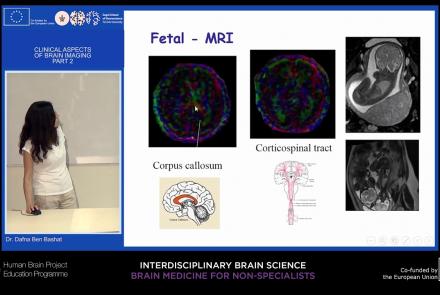
This lecture picks up from the previous lesson, providing an overview of neuroimaging techniques and their clinical applications.
Difficulty level: Beginner
Duration: 41:00
Speaker: : Dafna Ben Bashat

This lesson provides a basic introduction to clinical presentation of schizophrenia, its etiology, and current treatment options.
Difficulty level: Beginner
Duration: 51:49
Speaker: : Wolfgang Fleischhacker

This lecture focuses on the rationale for employing neuroimaging methods for movement disorders.
Difficulty level: Beginner
Duration: 1:04:04
Speaker: : Bogdan Draganski

The INS Emerging Issues Task Force held a virtual panel discussion on the evolving role and increased adoption of digital applications to deliver mental health care. It was held as a session at the annual conference of the Italian Society for Neuroethics.
Difficulty level: Beginner
Duration: 58:30