
Lesson type
Difficulty level

This lesson continues with the second workshop on reproducible science, focusing on additional open source tools for researchers and data scientists, such as the R programming language for data science, as well as associated tools like RStudio and R Markdown. Additionally, users are introduced to Python and iPython notebooks, Google Colab, and are given hands-on tutorials on how to create a Binder environment, as well as various containers in Docker and Singularity.
Difficulty level: Beginner
Duration: 1:16:04
Speaker: : Erin Dickie and Sejal Patel

This talk describes the relevance and power of using brain atlases as part of one's data integration pipeline.
Difficulty level: Beginner
Duration: 15:37
Speaker: : Timo Dickscheid

In this lesson, you will learn how to understand data management plans and why data sharing is important.
Difficulty level: Beginner
Duration: 44:24
Speaker: : Jenny Muilenburg

Course:
This quick visual walkthrough presents the steps required in uploading data into a brainlife project using the graphical user interface (GUI).
Difficulty level: Beginner
Duration: 2:00
Speaker: :

Course:
This short walkthrough documents the steps needed to find a dataset in OpenNeuro, a free and open platform for sharing MRI, MEG, EEG, iEEG, ECoG, ASL, and PET data, and import it directly to a brainlife project.
Difficulty level: Beginner
Duration: 0:35
Speaker: :

Course:
This lesson describes and shows four different ways one may upload their data to brainlife.io.
Difficulty level: Beginner
Duration: 6:35
Speaker: :

Course:
This lecture covers why data sharing and other collaborative practices are important, how these practices are developed, and the challenges involved in their development and implementation.
Difficulty level: Beginner
Duration: 11:41
Speaker: : Joost Wagenaar

This lecture discusses the FAIR principles as they apply to electrophysiology data and metadata, the building blocks for community tools and standards, platforms and grassroots initiatives, and the challenges therein.
Difficulty level: Beginner
Duration: 8:11
Speaker: : Thomas Wachtler
This lecture contains an overview of electrophysiology data reuse within the EBRAINS ecosystem.
Difficulty level: Beginner
Duration: 15:57
Speaker: : Andrew Davison
This lecture contains an overview of the Distributed Archives for Neurophysiology Data Integration (DANDI) archive, its ties to FAIR and open-source, integrations with other programs, and upcoming features.
Difficulty level: Beginner
Duration: 13:34
Speaker: : Yaroslav O. Halchenko

This lesson provides a short overview of the main features of the Canadian Open Neuroscience Platform (CONP) Portal, a web interface that facilitates open science for the neuroscience community by simplifying global access to and sharing of datasets and tools. The Portal internalizes the typical cycle of a research project, beginning with data acquisition, followed by data processing with published tools, and ultimately the publication of results with a link to the original dataset.
Difficulty level: Beginner
Duration: 14:03
Speaker: : Samir Das, Tristan Glatard

This lesson gives an in-depth introduction of ethics in the field of artificial intelligence, particularly in the context of its impact on humans and public interest. As the healthcare sector becomes increasingly affected by the implementation of ever stronger AI algorithms, this lecture covers key interests which must be protected going forward, including privacy, consent, human autonomy, inclusiveness, and equity.
Difficulty level: Beginner
Duration: 1:22:06
Speaker: : Daniel Buchman

This is the second of three lectures around current challenges and opportunities facing neuroinformatic infrastructure for handling sensitive data.
Difficulty level: Beginner
Duration: 48:26
Speaker: : Michael Schirner

In this lesson you will learn about current efforts towards integrating multimodal human brain data using the open source SCORE HED library schema.
Difficulty level: Beginner
Duration: 23:29
Speaker: : Dora Hermes

This lecture will highlight our current understanding and recent developments in the field of neurodegenerative disease research, as well as the future of diagnostics and treatment of neurodegenerative diseases.
Difficulty level: Beginner
Duration: 39:05
Speaker: : Nir Giladi

This lecture continues from part one (previous lesson), highlighting our current understanding and recent developments in the field of neurodegenerative disease research, as well as the future of diagnostics and treatment of neurodegenerative diseases.
Difficulty level: Beginner
Duration: 45:27
Speaker: : Nir Giladi
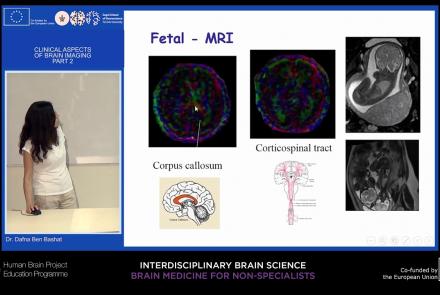
This lecture picks up from the previous lesson, providing an overview of neuroimaging techniques and their clinical applications.
Difficulty level: Beginner
Duration: 41:00
Speaker: : Dafna Ben Bashat

This lesson provides a basic introduction to clinical presentation of schizophrenia, its etiology, and current treatment options.
Difficulty level: Beginner
Duration: 51:49
Speaker: : Wolfgang Fleischhacker

This lecture focuses on the rationale for employing neuroimaging methods for movement disorders.
Difficulty level: Beginner
Duration: 1:04:04
Speaker: : Bogdan Draganski

The INS Emerging Issues Task Force held a virtual panel discussion on the evolving role and increased adoption of digital applications to deliver mental health care. It was held as a session at the annual conference of the Italian Society for Neuroethics.
Difficulty level: Beginner
Duration: 58:30