
Lesson type
Difficulty level

Course:
This hands-on tutorial explains how to run your own Minion session in the MetaCell cloud using jupityr notebooks.
Difficulty level: Beginner
Duration: 01:28:03
Speaker: : Daniel Aharoni, Phil Dong

This lesson continues with the second workshop on reproducible science, focusing on additional open source tools for researchers and data scientists, such as the R programming language for data science, as well as associated tools like RStudio and R Markdown. Additionally, users are introduced to Python and iPython notebooks, Google Colab, and are given hands-on tutorials on how to create a Binder environment, as well as various containers in Docker and Singularity.
Difficulty level: Beginner
Duration: 1:16:04
Speaker: : Erin Dickie and Sejal Patel

This hands-on tutorial walks you through DataJoint platform, highlighting features and schema which can be used to build robost neuroscientific pipelines.
Difficulty level: Beginner
Duration: 26:06
Speaker: : Milagros Marin

In this hands-on session, you will learn how to explore and work with DataLad datasets, containers, and structures using Jupyter notebooks.
Difficulty level: Beginner
Duration: 58:05
Speaker: : Michał Szczepanik

In this tutorial, you will learn how to use TVB-NEST toolbox on your local computer.
Difficulty level: Beginner
Duration: 2:16
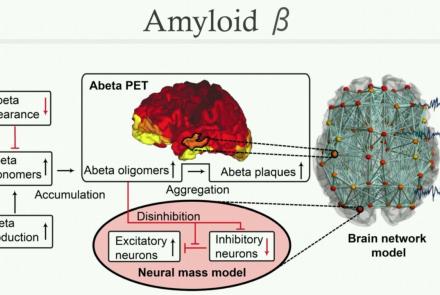
This tutorial provides instruction on how to perform multi-scale simulation of Alzheimer's disease on The Virtual Brain Simulation Platform.
Difficulty level: Beginner
Duration: 29:08

Course:
This lesson provides a brief overview of the Python programming language, with an emphasis on tools relevant to data scientists.
Difficulty level: Beginner
Duration: 1:16:36
Speaker: : Tal Yarkoni

Course:
This lesson consists of a talk about the history and future of academic publishing and the need for transparency, as well as a live demo of an alpha version of NeuroLibre, a preprint server that goes beyond the PDF to complement research articles. This video was part of a virutal QBIN SciComm seminar.
Difficulty level: Beginner
Duration: 00:53:35
Speaker: : Nikola Stikov and Agah Karakuzu

Course:
This lesson gives a general introduction to the essentials of navigating through a Bash terminal environment. The lesson is based on the Software Carpentries "Introduction to the Shell" and was given in the context of the BrainHack School 2020.
Difficulty level: Beginner
Duration: 1:12:22
Speaker: : Ross Markello

Course:
This lesson covers Python applications to data analysis, demonstrating why it has become ubiquitous in data science and neuroscience. The lesson was given in the context of the BrainHack School 2020.
Difficulty level: Beginner
Duration: 2:38:45
Speaker: : Ross Markello

Course:
This lesson provides a hands-on, Jupyter-notebook-based tutorial to apply machine learning in Python to brain-imaging data.
Difficulty level: Beginner
Duration: 02:13:53
Speaker: : Jake Vogel

Course:
This lesson from freeCodeCamp introduces Scikit-learn, the most widely used machine learning Python library.
Difficulty level: Beginner
Duration: 02:09:22
Speaker: :
Course:
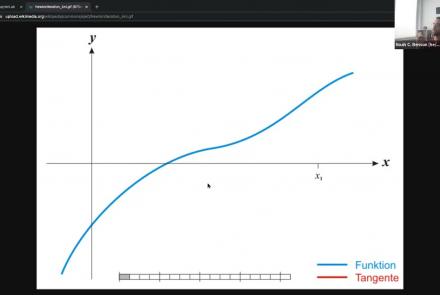
As a part of NeuroHackademy 2021, Noah Benson gives an introduction to Pytorch, one of the two most common software packages for deep learning applications to the neurosciences.
Difficulty level: Beginner
Duration: 00:50:40
Speaker: :

Course:
In this hands-on tutorial, Dr. Robert Guangyu Yang works through a number of coding exercises to see how RNNs can be easily used to study cognitive neuroscience questions, with a quick demonstration of how we can train and analyze RNNs on various cognitive neuroscience tasks. Familiarity of Python and basic knowledge of Pytorch are assumed.
Difficulty level: Beginner
Duration: 00:26:38
Speaker: :

Course:
An introduction to data management, manipulation, visualization, and analysis for neuroscience. Students will learn scientific programming in Python, and use this to work with example data from areas such as cognitive-behavioral research, single-cell recording, EEG, and structural and functional MRI. Basic signal processing techniques including filtering are covered. The course includes a Jupyter Notebook and video tutorials.
Difficulty level: Beginner
Duration: 1:09:16
Speaker: : Aaron J. Newman