
Lesson type
Difficulty level

This lesson gives a description of the BrainHealth Databank, a repository of many types of health-related data, whose aim is to accelerate research, improve care, and to help better understand and diagnose mental illness, as well as develop new treatments and prevention strategies.
This lesson corresponds to slides 46-78 of the PDF below.
Difficulty level: Beginner
Duration: 1:12:25
Speaker: : Joanna Yu

This lesson describes not only the need for precision medicine, but also the current state of the methods, pharmacogenetic approaches, utility and implementation of such care today.
This lesson corresponds to slides 1-50 of the PowerPoint below.
Difficulty level: Beginner
Duration: 1:24:30
Speaker: : Dan Felsky

Course:
This lecture covers the needs and challenges involved in creating a FAIR ecosystem for neuroimaging research.
Difficulty level: Beginner
Duration: 12:26
Speaker: : Camille Maumet

This lecture covers how to make modeling workflows FAIR by working through a practical example, dissecting the steps within the workflow, and detailing the tools and resources used at each step.
Difficulty level: Beginner
Duration: 15:14
Speaker: : Salvador Dura-Bernal
This lecture focuses on the structured validation process within computational neuroscience, including the tools, services, and methods involved in simulation and analysis.
Difficulty level: Beginner
Duration: 14:19
Speaker: : Michael Denker

Course:
This session provides users with an introduction to tools and resources that facilitate the implementation of FAIR in their research.
Difficulty level: Beginner
Duration: 38:36
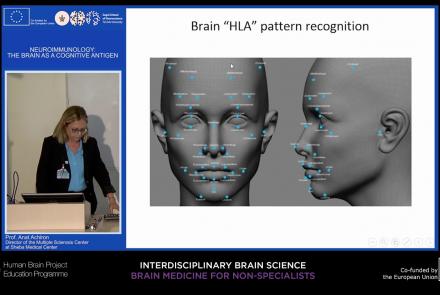
This lecture focuses on how the immune system can target and attack the nervous system to produce autoimmune responses that may result in diseases such as multiple sclerosis, neuromyelitis, and lupus cerebritis manifested by motor, sensory, and cognitive impairments. Despite the fact that the brain is an immune-privileged site, autoreactive lymphocytes producing proinflammatory cytokines can cause active brain inflammation, leading to myelin and axonal loss.
Difficulty level: Beginner
Duration: 37:36
Speaker: : Anat Achiron

This lesson provides an overview of how to construct computational pipelines for neurophysiological data using DataJoint.
Difficulty level: Beginner
Duration: 17:37
Speaker: : Dimitri Yatsenko

This lesson delves into the the structure of one of the brain's most elemental computational units, the neuron, and how said structure influences computational neural network models.
Difficulty level: Intermediate
Duration: 6:33
Speaker: : Marcus Ghosh

Following the previous lesson on neuronal structure, this lesson discusses neuronal function, particularly focusing on spike triggering and propogation.
Difficulty level: Intermediate
Duration: 6:58
Speaker: : Marcus Ghosh

This lesson goes over the basic mechanisms of neural synapses, the space between neurons where signals may be transmitted.
Difficulty level: Intermediate
Duration: 7:03
Speaker: : Marcus Ghosh

While the previous lesson in the Neuro4ML course dealt with the mechanisms involved in individual synapses, this lesson discusses how synapses and their neurons' firing patterns may change over time.
Difficulty level: Intermediate
Duration: 4:48
Speaker: : Marcus Ghosh

Whereas the previous two lessons described the biophysical and signalling properties of individual neurons, this lesson describes properties of those units when part of larger networks.
Difficulty level: Intermediate
Duration: 6:00
Speaker: : Marcus Ghosh

This lesson covers the ionic basis of the action potential, including the Hodgkin-Huxley model.
Difficulty level: Beginner
Duration: 28:29
Speaker: : Carl Petersen

Course:
This lesson provides an introduction to the myriad forms of cellular mechanisms whicn underpin healthy brain function and communication.
Difficulty level: Beginner
Duration: 12:20
Speaker: : Carl Petersen
In this lesson you will learn about the ionic basis of the action potential, including the Hodgkin-Huxley model.
Difficulty level: Beginner
Duration: 28:29
Speaker: : Carl Petersen
This lesson provides an introduction to the course Cellular Mechanisms of Brain Function.
Difficulty level: Beginner
Duration: 12:20
Speaker: : Carl Petersen

This lesson covers membrane potential of neurons, and how parameters around this potential have direct consequences on cellular communication at both the individual and population level.
Difficulty level: Beginner
Duration: 28:08
Speaker: : Carl Petersen

This lesson covers the spatiotemporal dynamics of the membrane potential.
Difficulty level: Beginner
Duration: 19:14
Speaker: : Carl Petersen

In this lesson you will learn about neurons' ability to generate signals called action potentials, and biophysics of voltage-gated ion channels.
Difficulty level: Beginner
Duration: 27:47
Speaker: : Carl Petersen