
Lesson type
Difficulty level

Course:
The state of the field regarding the diagnosis and treatment of major depressive disorder (MDD) is discussed. Current challenges and opportunities facing the research and clinical communities are outlined, including appropriate quantitative and qualitative analyses of the heterogeneity of biological, social, and psychiatric factors which may contribute to MDD.
Difficulty level: Beginner
Duration: 1:29:28
Speaker: : Brett Jones, Victor Tang

Course:
This lesson delves into the opportunities and challenges of telepsychiatry. While novel digital approaches to clinical research and care have the potential to improve and accelerate patient outcomes, researchers and care providers must consider new population factors, such as digital disparity.
Difficulty level: Beginner
Duration: 1:20:28
Speaker: : Abhi Pratap

This lesson provides a basic introduction to clinical presentation of schizophrenia, its etiology, and current treatment options.
Difficulty level: Beginner
Duration: 51:49
Speaker: : Wolfgang Fleischhacker

The INS Emerging Issues Task Force held a virtual panel discussion on the evolving role and increased adoption of digital applications to deliver mental health care. It was held as a session at the annual conference of the Italian Society for Neuroethics.
Difficulty level: Beginner
Duration: 58:30

This lecture presents the Medical Informatic Platform's data federation for Traumatic Brain Injury.
Difficulty level: Intermediate
Duration: 25:55
Speaker: : Stefano Finazzi

This lecture gives insights into the Medical Informatics Platform's current and future data privacy model.
Difficulty level: Intermediate
Duration: 17:29
Speaker: : Yannis Ioannidis

This lecture explains the concept of federated analysis in the context of medical data, associated challenges. The lecture also presents an example of hospital federations via the Medical Informatics Platform.
Difficulty level: Intermediate
Duration: 19:15
Speaker: : Yannis Ioannidis

This talk discusses what are usually considered successful outcomes of scientific research consortia, and how those outcomes can be translated into lasting impacts.
Difficulty level: Beginner
Duration: 18:24
Speaker: : Anita Bandrowski
In this lesson, you will learn about the BRAIN Initiative Cell Atlas Network (BICAN) and how this project adopts a federated approach to data sharing.
Difficulty level: Beginner
Duration: 11:23
Speaker: : Owen White

This talks presents an overview of the potential for data federation in stroke research.
Difficulty level: Intermediate
Duration: 21:37
Speaker: : Maurizio A. Leone

This lecture explains the need for data federation in medicine and how it can be achieved.
Difficulty level: Intermediate
Duration: 27:09
Speaker: : Philippe Ryvlin
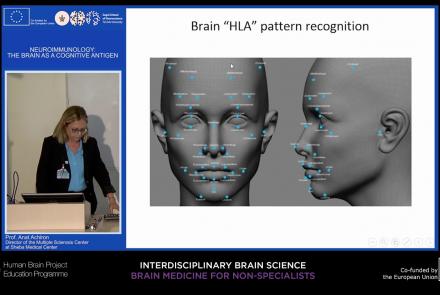
This lecture focuses on how the immune system can target and attack the nervous system to produce autoimmune responses that may result in diseases such as multiple sclerosis, neuromyelitis, and lupus cerebritis manifested by motor, sensory, and cognitive impairments. Despite the fact that the brain is an immune-privileged site, autoreactive lymphocytes producing proinflammatory cytokines can cause active brain inflammation, leading to myelin and axonal loss.
Difficulty level: Beginner
Duration: 37:36
Speaker: : Anat Achiron