
Lesson type
Difficulty level

This lecture covers concepts associated with neural nets, including rotation and squashing, and is a part of the Deep Learning Course at New York University's Center for Data Science (CDS).
Difficulty level: Intermediate
Duration: 1:01:53
Speaker: : Alfredo Canziani

This lecture covers the concept of neural nets training (tools, classification with neural nets, and PyTorch implementation) and is a part of the Deep Learning Course at NYU's Center for Data Science.
Difficulty level: Intermediate
Duration: 1:05:47
Speaker: : Alfredo Canziani

This lecture discusses the concept of natural signals properties and the convolutional nets in practice and is a part of the Deep Learning Course at NYU's Center for Data Science.
Difficulty level: Intermediate
Duration: 1:09:12
Speaker: : Alfredo Canziani

This lecture covers the concept of recurrent neural networks: vanilla and gated (LSTM) and is a part of the Deep Learning Course at NYU's Center for Data Science.
Difficulty level: Intermediate
Duration: 1:05:36
Speaker: : Alfredo Canziani

This tutorial covers LV-EBM to target prop to (vanilla, denoising, contractive, variational) autoencoder and is a part of the Advanced Energy-Based Models module of the the Deep Learning Course at NYU's Center for Data Science. Prerequisites for this course include: Energy-Based Models I, Energy-Based Models II, Energy-Based Models III, Energy-Based Models IV, and an Introduction to Data Science or a Graduate Level Machine Learning course.
Difficulty level: Advanced
Duration: 1:00:34
Speaker: : Alfredo Canziani
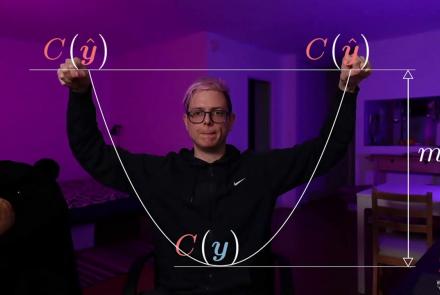
This tutorial covers the concepts of autoencoders, denoising encoders, and variational autoencoders (VAE) with PyTorch, as well as generative adversarial networks and code. It is a part of the Advanced energy based models modules of the the Deep Learning Course at NYU's Center for Data Science. Prerequisites for this course include: Energy-Based Models I, Energy-Based Models II, Energy-Based Models III, Energy-Based Models IV, Energy-Based Models V, and an Introduction to Data Science or a Graduate Level Machine Learning course.
Difficulty level: Advanced
Duration: 1:07:50
Speaker: : Alfredo Canziani

This tutorial covers advanced concept of energy-based models. The lecture is a part of the Associative Memories module of the the Deep Learning Course at NYU's Center for Data Science.
Difficulty level: Advanced
Duration: 1:12:00
Speaker: : Alfredo Canziani

Course:
This tutuorial covers the concept of graph convolutional networks and is a part of the Deep Learning Course at NYU's Center for Data Science. Prerequisites for this module include: Modules 1 - 5 of this course and an Introduction to Data Science or a Graduate Level Machine Learning course.
Difficulty level: Advanced
Duration: 57:33
Speaker: : Alfredo Canziani

Course:
This lecture covers the concepts of emulation of kinematics from observations and training a policy. It is a part of the Deep Learning Course at NYU's Center for Data Science. Prerequisites for this module include: Models 1-6 of this course and an Introduction to Data Science or a Graduate Level Machine Learning course.
Difficulty level: Advanced
Duration: 1:01:21
Speaker: : Alfredo Canziani
Course:
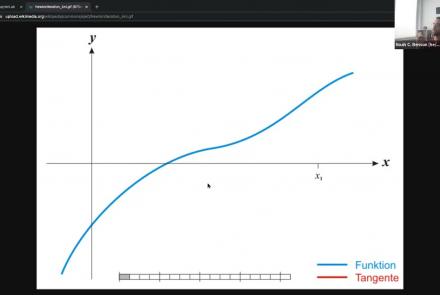
As a part of NeuroHackademy 2021, Noah Benson gives an introduction to Pytorch, one of the two most common software packages for deep learning applications to the neurosciences.
Difficulty level: Beginner
Duration: 00:50:40
Speaker: :

Course:
In this hands-on tutorial, Dr. Robert Guangyu Yang works through a number of coding exercises to see how RNNs can be easily used to study cognitive neuroscience questions, with a quick demonstration of how we can train and analyze RNNs on various cognitive neuroscience tasks. Familiarity of Python and basic knowledge of Pytorch are assumed.
Difficulty level: Beginner
Duration: 00:26:38
Speaker: :

Course:
An introduction to data management, manipulation, visualization, and analysis for neuroscience. Students will learn scientific programming in Python, and use this to work with example data from areas such as cognitive-behavioral research, single-cell recording, EEG, and structural and functional MRI. Basic signal processing techniques including filtering are covered. The course includes a Jupyter Notebook and video tutorials.
Difficulty level: Beginner
Duration: 1:09:16
Speaker: : Aaron J. Newman