
Lesson type
Difficulty level

This lesson provides an introduction the International Neuroinformatics Coordinating Facility (INCF), its mission towards FAIR neuroscience, and future directions.
Difficulty level: Beginner
Duration: 20:29
Speaker: : Maryann Martone
In this talk, you will learn about the standardization schema for data formats among two of the US BRAIN Initiative networks: the Cell Census Network (BICCN) and the Cell Atlas Network (BICAN).
Difficulty level: Beginner
Duration: 14:58
Speaker: : Michael Hawrylycz

This talk discusses what are usually considered successful outcomes of scientific research consortia, and how those outcomes can be translated into lasting impacts.
Difficulty level: Beginner
Duration: 18:24
Speaker: : Anita Bandrowski

This final lesson of the course consists of the panel discussion for Streamlining Cross-Platform Data Integration session during the first day of INCF's Neuroinformatics Assembly 2023.
Difficulty level: Beginner
Duration: 50:16
Speaker: :

This brief talk describes the challenge of global data sharing and governance, as well as efforts of the the Brain Research International Data Governance & Exchange (BRIDGE) to develop ready-made workflows to share data globally.
Difficulty level: Beginner
Duration: 6:47
Speaker: : Kimberly Ray

This lesson is the first part of a three-part series on the development of neuroinformatic infrastructure to ensure compliance with European data privacy standards and laws.
Difficulty level: Beginner
Duration: 1:10:05
Speaker: : Michael Schirner

This brief video gives an introduction to the eighth session of INCF's Neuroinformatics Assembly 2023, focusing on FAIR data and the role of academic journals.
Difficulty level: Beginner
Duration: 5:57
Speaker: : Jan G. Bjaalie

This brief talk outlines the obstacles and opportunities involved in striving for more open and reproducible publishing, highlighting the need for investment in the technical and governance sectors of FAIR data and software.
Difficulty level: Beginner
Duration: 8:38
Speaker: : Jean-Babtiste Poline

This talk gives an overview of the complicated nature of sharing of neuroscientific data in an environment of numerous and often conflicting legal systems around the world.
Difficulty level: Beginner
Duration: 14:00
Speaker: : Franco Pestilli

This lecture covers a wide range of aspects regarding neuroinformatics and data governance, describing both their historical developments and current trajectories. Particular tools, platforms, and standards to make your research more FAIR are also discussed.
Difficulty level: Beginner
Duration: 54:58
Speaker: : Franco Pestilli

Course:
This lecture covers the needs and challenges involved in creating a FAIR ecosystem for neuroimaging research.
Difficulty level: Beginner
Duration: 12:26
Speaker: : Camille Maumet
Course:
This lecture covers multiple aspects of FAIR neuroscience data: what makes it unique, the challenges to making it FAIR, the importance of overcoming these challenges, and how data governance comes into play.
Difficulty level: Beginner
Duration: 14:56
Speaker: : Damian Eke

In this interdisciplinary panel discussion, panelists explored and discussed the technical, ethical, and legal dimensions of brain data governance and neurorights.
Difficulty level: Beginner
Duration: 1:00:14
Course:
Open Brain Consent is an international initiative aiming to address the challenge of creating participant consent language that will promote the open sharing of data, protect participant privacy, and conform to legal norms and institutional review boards.
Open Brain Consent addresses the aforementioned difficulties in neuroscience research with human participants by collecting:
- widely acceptable consent forms (with various translations) allowing deposition of anonymized data to public data archives
- collection of tools/pipelines to help anonymization of neuroimaging data making it ready for sharing
Difficulty level: Beginner
Duration:
Speaker: :

Course:
The state of the field regarding the diagnosis and treatment of major depressive disorder (MDD) is discussed. Current challenges and opportunities facing the research and clinical communities are outlined, including appropriate quantitative and qualitative analyses of the heterogeneity of biological, social, and psychiatric factors which may contribute to MDD.
Difficulty level: Beginner
Duration: 1:29:28
Speaker: : Brett Jones, Victor Tang

Course:
This lesson delves into the opportunities and challenges of telepsychiatry. While novel digital approaches to clinical research and care have the potential to improve and accelerate patient outcomes, researchers and care providers must consider new population factors, such as digital disparity.
Difficulty level: Beginner
Duration: 1:20:28
Speaker: : Abhi Pratap
In this lesson, you will learn about data management within the Open Data Commons (ODC) framework, and in particular, how Spinal Cord Injury (SCI) data is stored, shared, and published. You will also hear about Frictionless Data, an open-source toolkit aimed at simplifying the data experience.
Difficulty level: Beginner
Duration: 19:10
Speaker: : Jeff Grethe & Sourabh Prakash

This lecture will highlight our current understanding and recent developments in the field of neurodegenerative disease research, as well as the future of diagnostics and treatment of neurodegenerative diseases.
Difficulty level: Beginner
Duration: 39:05
Speaker: : Nir Giladi

This lecture continues from part one (previous lesson), highlighting our current understanding and recent developments in the field of neurodegenerative disease research, as well as the future of diagnostics and treatment of neurodegenerative diseases.
Difficulty level: Beginner
Duration: 45:27
Speaker: : Nir Giladi
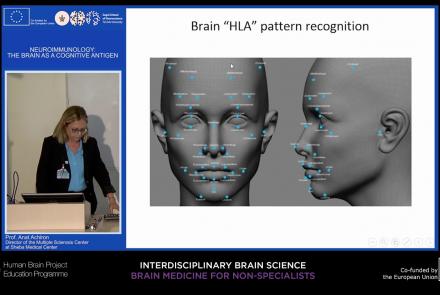
This lecture focuses on how the immune system can target and attack the nervous system to produce autoimmune responses that may result in diseases such as multiple sclerosis, neuromyelitis, and lupus cerebritis manifested by motor, sensory, and cognitive impairments. Despite the fact that the brain is an immune-privileged site, autoreactive lymphocytes producing proinflammatory cytokines can cause active brain inflammation, leading to myelin and axonal loss.
Difficulty level: Beginner
Duration: 37:36
Speaker: : Anat Achiron