
Lesson type
Difficulty level

This lecture covers the ethical implications of the use of pharmaceuticals to enhance brain functions and was part of the Neuro Day Workshop held by the NeuroSchool of Aix Marseille University.
Difficulty level: Beginner
Duration: 1:09:29
Speaker: : Eric Racine

This lecture covers the ethical implications of the use of brain-computer interfaces, brain-machine interfaces, and deep brain stimulation to enhance brain functions and was part of the Neuro Day Workshop held by the NeuroSchool of Aix Marseille University.
Difficulty level: Beginner
Duration: 1:02:00
Speaker: : Jens Clausen

This lecture covers the ethical implications of the use of functional neuroimaging to assess covert awareness in unconscious patients and was part of the Neuro Day Workshop held by the NeuroSchool of Aix Marseille University.
Difficulty level: Beginner
Duration: 1:00:50
Speaker: : Athena Demertzi

This lecture covers how neuroscience could potentially influence the legal/justice system and the ethical implications therein.
Difficulty level: Beginner
Duration: 55:19
Speaker: : Jennifer Chandler

This lecture covers the ethical implications of the neuroscience of moral judgment, and was part of the Neuro Day Workshop held by the NeuroSchool of Aix Marseille University.
Difficulty level: Beginner
Duration: 1:02:19
Speaker: : Bernard Baertschi

Course:
Panel discussion by leading scientists, engineers and philosophers discuss what brain-computer interfaces are and the unique scientific and ethical challenges they pose. hosted by Lynne Malcolm from ABC Radio National's All in the Mind program and features:
- Dr Hannah Maslen, Deputy Director, Oxford Uehiro Centre for Practical Ethics, University of Oxford
- Prof. Eric Racine, Director, Pragmatic Health Ethics Research Unity, Montreal Institute of Clinical Research
- Prof Jeffrey Rosenfeld, Director, Monash Institute of Medical Engineering, Monash University
- Dr Isabell Kiral-Kornek, AI and Life Sciences Researcher, IBM Research
- A/Prof Adrian Carter, Neuroethics Program Coordinator, ARC Centre of Excellence for Integrative Brain Function
Difficulty level: Intermediate
Duration: 1:14:34

Course:
Panel of experts discuss the virtues and risks of our digital health data being captured and used by others in the age of Facebook, metadata retention laws, Cambridge Analytica and a rapidly evolving neuroscience. The discussion was moderated by Jon Faine, ABC Radio presenter. The panelists were:
- Mr Sven Bluemmel, Victorian Information Commissioner
- Prof Judy Illes, Neuroethics Canada, University of British Columbia, Order of Canada
- Prof Mark Andrejevic, Professor of Media Studies, Monash University
- Ms Vrinda Edan, Chief Operating Officer, Victorian Mental Illness Awareness Council
Difficulty level: Intermediate
Duration: 1:10:30
Course:
Our ever-expanding global neuroscience landscape requires that we, as a society and as scientists, consider the underlying values and ethics that drive brain research across culture and continents. Across the globe seven large-scale brain research initiatives have emerged and have committed to working together to ensure neuroscience advances together attending to the emerging ethical issues embedded in neuroscience and its implications for society. In this lecture, five neuroethics questions will be presented, to guide neuroscience research in international brain research initiatives.
Difficulty level: Beginner
Duration: 1:02:21
Speaker: : Karen Rommelfanger
Course:
This lecture presents the hope, challenges, risks, and ethico-legal issues associated with advancements in neuroscience technology.
Difficulty level: Beginner
Duration: 27:58
Speaker: : James Giordano

To explore the challenges and the ethical issues raised by advances in do-it-yourself (DIY) neurotechnology, the Emerging Issues Task Force of the International Neuroethics Society organized a virtual panel discussion. The panel discussed neurotechnologies such as transcranial direct current stimulation (tDCS) and electroencephalogram (EEG) headsets and their ability to change the way we understand and alter our brains. Particular attention will be given to the use of neurotechnology by everyday people and the implications this has for regulatory oversight and citizen neuroscience.
Difficulty level: Beginner
Duration: 1:00:59

Panelists shared their unique perspectives on what role neurotechnology and technologists could play in exacerbating or thwarting scientific oppression. Technologies that record and stimulate the brain are set to transform medical treatment, interpersonal life, and even what it means to be human; but these neurotechnologies may, if we’re not careful, continue legacies of harm against people of color, women, LGBTQIA-identifying persons, and disabled people. How can we keep neurotechnology from becoming oppressive? What would 'anti-oppressive' brain technology look like?
Difficulty level: Beginner
Duration: 1:33:16

The INS Emerging Issues Task Force organized a virtual panel discussion on ‘Culturally-Aware Global Neuroethics.’ Panelists explored the issue of cultivating a culturally-aware global neuroethics, and discussed a range of illuminating examples of global priorities in neuroethics.
Difficulty level: Beginner
Duration: 1:03:27

In this interdisciplinary panel discussion, panelists explored and discussed the technical, ethical, and legal dimensions of brain data governance and neurorights.
Difficulty level: Beginner
Duration: 1:00:14

The INS Emerging Issues Task Force held a virtual panel discussion on the evolving role and increased adoption of digital applications to deliver mental health care. It was held as a session at the annual conference of the Italian Society for Neuroethics.
Difficulty level: Beginner
Duration: 58:30

To encapsulate the emerging concerns at the convergence between brain and environmental health whilst aligning it with ethical considerations, the Emerging Issues Task Force of the International Neuroethics Society organized a virtual panel discussion. The panel focused on four areas of analysis. Specific attention was given to how these four tiers come together to provide directions for future ethically-minded and behaviorally-driven environmental health research.
Difficulty level: Beginner
Duration: 1:03:34
Course:
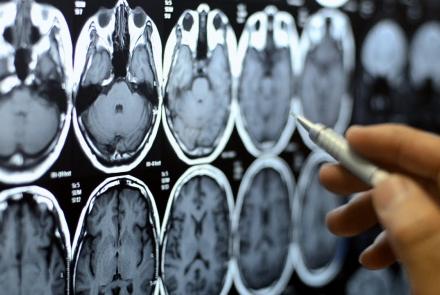
This lesson provides an overview of the ethical issues that have arisen as a result of the application of advancements in neurotechnology.
Difficulty level: Beginner
Duration: 9:31

Course:
This module covers how neurotechnology is perceived in media today. We discuss a few specific films and talk about how the perception of neurotechnology changes with our media. Finally, we introduce a few interesting terms related to ethics and address some future issues the technology may cause.
Difficulty level: Beginner
Duration: 12:03
Speaker: : Colin Fausnaught
Course:
In response to a growing need in the neuroscience community for concrete guidance concerning ethically sound and pragmatically feasible open data-sharing, the CONP has created an ‘Ethics Toolkit’. These documents (links found below in 'Documents' section) are meant to help researchers identify key elements in the design and conduct of their projects that are often required for the open sharing of neuroscience data, such as model consent language and approaches to de-identification.
This guidance is the product of extended discussions and careful drafting by the CONP Ethics and Governance Committee that considers both Canadian and international ethical frameworks and research practice. The best way to cite these resources is with their associated Zenodo DOI:

Difficulty level: Beginner
Duration:
Speaker: :
Course:
Open Brain Consent is an international initiative aiming to address the challenge of creating participant consent language that will promote the open sharing of data, protect participant privacy, and conform to legal norms and institutional review boards.
Open Brain Consent addresses the aforementioned difficulties in neuroscience research with human participants by collecting:
- widely acceptable consent forms (with various translations) allowing deposition of anonymized data to public data archives
- collection of tools/pipelines to help anonymization of neuroimaging data making it ready for sharing
Difficulty level: Beginner
Duration:
Speaker: :

This lecture covers how you can make your data public through EBRAINS. This talk focuses on the ethical considerations for sharing data, the requirements that are imposed by various regulations, particularly for sharing human data. The lecture also includes a discussion of how EBRAINS designs its services to deal with the ethical and regulatory aspects of sharing these kinds of data.
Difficulty level: Intermediate
Duration: 16:15
Speaker: : Maaike van Swieten and Jan Bjaalie