
Lesson type
Difficulty level

This lecture covers advanced concepts of energy-based models. The lecture is a part of the Associative Memories module of the the Deep Learning Course at NYU's Center for Data Science. Prerequisites for this course include: Energy-Based Models I, Energy-Based Models II, Energy-Based Models III, Energy-Based Models IV, Energy-Based Models V, and an Introduction to Data Science or a Graduate Level Machine Learning course.
Difficulty level: Advanced
Duration: 2:00:28
Speaker: : Yann LeCun

This tutorial covers advanced concept of energy-based models. The lecture is a part of the Associative Memories module of the the Deep Learning Course at NYU's Center for Data Science.
Difficulty level: Advanced
Duration: 1:12:00
Speaker: : Alfredo Canziani

Course:
This lecture provides an introduction to the problem of speech recognition using neural models, emphasizing the CTC loss for training and inference when input and output sequences are of different lengths. It also covers the concept of beam search for use during inference, and how that procedure may be modeled at training time using a Graph Transformer Network. It is a part of the Deep Learning Course at NYU's Center for Data Science. Prerequisites for this module include: Modules 1 - 5 of this course and an Introduction to Data Science or a Graduate Level Machine Learning course.
Difficulty level: Advanced
Duration: 1:55:03
Speaker: : Awni Hannun

Course:
This lecture covers the concepts of the architecture and convolution of traditional convolutional neural networks, the characteristics of graph and graph convolution, and spectral graph convolutional neural networks and how to perform spectral convolution, as well as the complete spectrum of Graph Convolutional Networks (GCNs), starting with the implementation of Spectral Convolution through Spectral Networks. It then provides insights on applicability of the other convolutional definition of Template Matching to graphs, leading to Spatial networks. This lecture is a part of the Deep Learning Course at NYU's Center for Data Science. Prerequisites for this module include: Modules 1 - 5 of this course and an Introduction to Data Science or a Graduate Level Machine Learning course.
Difficulty level: Advanced
Duration: 2:00:22
Speaker: : Xavier Bresson

Course:
This tutuorial covers the concept of graph convolutional networks and is a part of the Deep Learning Course at NYU's Center for Data Science. Prerequisites for this module include: Modules 1 - 5 of this course and an Introduction to Data Science or a Graduate Level Machine Learning course.
Difficulty level: Advanced
Duration: 57:33
Speaker: : Alfredo Canziani

Course:
This lecture covers the concept of model predictive control and is a part of the Deep Learning Course at NYU's Center for Data Science. Prerequisites for this module include: Models 1-6 of this course and an Introduction to Data Science or a Graduate Level Machine Learning course.
Difficulty level: Advanced
Duration: 1:10:22
Speaker: : Alfredo Canziani

Course:
This lecture covers the concepts of emulation of kinematics from observations and training a policy. It is a part of the Deep Learning Course at NYU's Center for Data Science. Prerequisites for this module include: Models 1-6 of this course and an Introduction to Data Science or a Graduate Level Machine Learning course.
Difficulty level: Advanced
Duration: 1:01:21
Speaker: : Alfredo Canziani

Course:
This lecture covers the concept of predictive policy learning under uncertainty and is a part of the Deep Learning Course at NYU's Center for Data Science. Prerequisites for this module include: Models 1-6 of this course and an Introduction to Data Science or a Graduate Level Machine Learning course.
Difficulty level: Advanced
Duration: 1:14:44
Speaker: : Alfredo Canziani

Course:
This lecture covers the concepts of gradient descent, stochastic gradient descent, and momentum. It is a part of the Deep Learning Course at NYU's Center for Data Science. Prerequisites for this module include: Models 1-7 of this course and an Introduction to Data Science or a Graduate Level Machine Learning course.
Difficulty level: Advanced
Duration: 1:29:05
Speaker: : Aaron DeFazio

Course:
This lecture continues on the topic of descent from the previous lesson, Optimization I. This lesson is a part of the Deep Learning Course at NYU's Center for Data Science. Prerequisites for this module include: Models 1-7 of this course and an Introduction to Data Science or a Graduate Level Machine Learning course.
Difficulty level: Advanced
Duration: 1:51:32
Speaker: : Alfredo Canziani
Course:
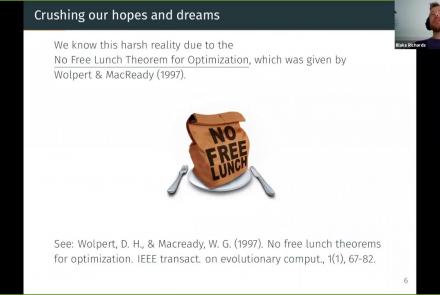
This lesson gives an introduction to deep learning, with a perspective via inductive biases and emphasis on correctly matching deep learning to the right research questions.
Difficulty level: Beginner
Duration: 01:35:12
Speaker: : Blake Richards
Course:
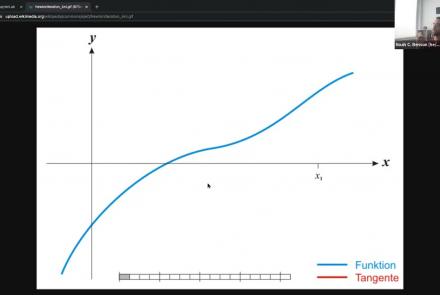
As a part of NeuroHackademy 2021, Noah Benson gives an introduction to Pytorch, one of the two most common software packages for deep learning applications to the neurosciences.
Difficulty level: Beginner
Duration: 00:50:40
Speaker: :

Course:
Learn how to use TensorFlow 2.0 in this full tutorial for beginners. This course is designed for Python programmers looking to enhance their knowledge and skills in machine learning and artificial intelligence.
Throughout the 8 modules in this course you will learn about fundamental concepts and methods in ML & AI like core learning algorithms, deep learning with neural networks, computer vision with convolutional neural networks, natural language processing with recurrent neural networks, and reinforcement learning.
Difficulty level: Beginner
Duration: 06:52:07
Speaker: :

Course:
In this hands-on tutorial, Dr. Robert Guangyu Yang works through a number of coding exercises to see how RNNs can be easily used to study cognitive neuroscience questions, with a quick demonstration of how we can train and analyze RNNs on various cognitive neuroscience tasks. Familiarity of Python and basic knowledge of Pytorch are assumed.
Difficulty level: Beginner
Duration: 00:26:38
Speaker: :

This brief video provides a welcome and short introduction to the outline of the INCF Short Course in Neuroinformatics, held Seattle, Washington in October 2023, in coordination with the West Big Data Hub and the University of Washington.
Difficulty level: Beginner
Duration: 4:58
Speaker: : Ariel Rokem

Course:
This lecture will provide an overview of the INCF Training Suite, a collection of tools that embraces the FAIR principles developed by members of the INCF Community. This will include an overview of TrainingSpace, Neurostars, and KnowledgeSpace.
Difficulty level: Beginner
Duration: 09:50
Speaker: : Mathew Abrams

Course:
The International Brain Initiative (IBI) is a consortium of the world’s major large-scale brain initiatives and other organizations with a vested interest in catalyzing and advancing neuroscience research through international collaboration and knowledge sharing. This workshop introduces the IBI, the efforts of the Data Standards and Sharing Working Group, and keynote lectures on the impact of data standards and sharing on large-scale brain projects, as well as a discussion on prospects and needs for neural data sharing.
Difficulty level: Intermediate
Duration: 2:06:58

Course:
KnowledgeSpace (KS) is a data discoverability portal and neuroscience encyclopedia that was developed to make it easier for the neuroscience community to find publicly available datasets that adhere to the FAIR Principles and to provide an integrated view of neuroscience concepts found in Wikipedia and NeuroLex linked with PubMed and 17 of the world's leading neuroscience repositories. In short, KS provides a single point of entry where reseaerchers can search for a neuroscience concept of interest and receive results that include: i. a description of the term found in Wikipedia/NeuroLex, ii. links to publicly available datasets related to the concept of interest, and iii. up-to-date references that support the concept of interests found in PubMed. APIs are available so that developers of other neuroscience research infrastructures can integrate KS components in their infrastructures. If your repository or your favorite repository is not indexed in KS, please contact us.
Difficulty level: Beginner
Duration: 6:14
Speaker: : Heather Topple