
Lesson type
Difficulty level

This lesson gives an in-depth introduction of ethics in the field of artificial intelligence, particularly in the context of its impact on humans and public interest. As the healthcare sector becomes increasingly affected by the implementation of ever stronger AI algorithms, this lecture covers key interests which must be protected going forward, including privacy, consent, human autonomy, inclusiveness, and equity.
Difficulty level: Beginner
Duration: 1:22:06
Speaker: : Daniel Buchman

This is the second of three lectures around current challenges and opportunities facing neuroinformatic infrastructure for handling sensitive data.
Difficulty level: Beginner
Duration: 48:26
Speaker: : Michael Schirner

In this lesson you will learn about current efforts towards integrating multimodal human brain data using the open source SCORE HED library schema.
Difficulty level: Beginner
Duration: 23:29
Speaker: : Dora Hermes

This lecture will highlight our current understanding and recent developments in the field of neurodegenerative disease research, as well as the future of diagnostics and treatment of neurodegenerative diseases.
Difficulty level: Beginner
Duration: 39:05
Speaker: : Nir Giladi

This lecture continues from part one (previous lesson), highlighting our current understanding and recent developments in the field of neurodegenerative disease research, as well as the future of diagnostics and treatment of neurodegenerative diseases.
Difficulty level: Beginner
Duration: 45:27
Speaker: : Nir Giladi
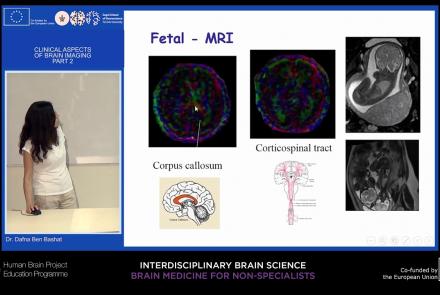
This lecture picks up from the previous lesson, providing an overview of neuroimaging techniques and their clinical applications.
Difficulty level: Beginner
Duration: 41:00
Speaker: : Dafna Ben Bashat

This lesson provides a basic introduction to clinical presentation of schizophrenia, its etiology, and current treatment options.
Difficulty level: Beginner
Duration: 51:49
Speaker: : Wolfgang Fleischhacker

This lecture focuses on the rationale for employing neuroimaging methods for movement disorders.
Difficulty level: Beginner
Duration: 1:04:04
Speaker: : Bogdan Draganski

The INS Emerging Issues Task Force held a virtual panel discussion on the evolving role and increased adoption of digital applications to deliver mental health care. It was held as a session at the annual conference of the Italian Society for Neuroethics.
Difficulty level: Beginner
Duration: 58:30

This lesson contains both a lecture and a tutorial component. The lecture (0:00-20:03 of YouTube video) discusses both the need for intersectional approaches in healthcare as well as the impact of neglecting intersectionality in patient populations. The lecture is followed by a practical tutorial in both Python and R on how to assess intersectional bias in datasets. Links to relevant code and data are found below.
Difficulty level: Beginner
Duration: 52:26

Course:
Maximize Your Research With Cloud Workspaces is a talk aimed at researchers who are looking for innovative ways to set up and execute their life science data analyses in a collaborative, extensible, open-source cloud environment. This panel discussion is brought to you by MetaCell and scientists from leading universities who share their experiences of advanced analysis and collaborative learning through the Cloud.
Difficulty level: Beginner
Duration: 55:43

This talk enumerates the challenges regarding data accessibility and reusability inherent in the current scientific publication system, and discusses novel approaches to these challenges, such as the EBRAINS Live Papers platform.
Difficulty level: Beginner
Duration: 18:08
Speaker: : Andrew Davison

In this lesson, you will learn about how team science unfolds in practice, as well as what are the standards and best practices used by teams, and how well these best practices function and support scientific output.
Difficulty level: Beginner
Duration: 15:21
Speaker: : Hannah Bayer
In this lesson, you will learn about approaches to make the field of neuroscience more open and fair, particularly regarding the integration of equality, diversity, and inclusion (EDI) as guiding principles for team collaboration.
Difficulty level: Beginner
Duration: 14:11
Speaker: : Karin Grasenick

This lesson discusses the topic of credit and contribution in open and FAIR neuroscience, looking through the respective lenses of systems, teams, and people.
Difficulty level: Beginner
Duration: 24:34
Speaker: : Tanya Brown

In this talk, you will hear about the challenges and costs of being FAIR in the many scientific fields, as well as opportunities to transform the ecology of the academic crediting system.
Difficulty level: Beginner
Duration: 14:56
Speaker: : Zefan Zheng

This lesson consists of a brief discussion around this sessions previous talks.
Difficulty level: Beginner
Duration: 12:43

In this lightning talk, you will learn about BrainGlobe, an initiative which exists to facilitate the development of interoperable Python-based tools for computational neuroanatomy.
Difficulty level: Beginner
Duration: 3:33
Speaker: : Alessandro Felder

This lesson consists of a panel discussion, wrapping up the INCF Neuroinformatics Assembly 2023 workshop Research Workflows for Collaborative Neuroscience.
Difficulty level: Beginner
Duration: 25:33
Speaker: :

This talk gives an overview of the complicated nature of sharing of neuroscientific data in an environment of numerous and often conflicting legal systems around the world.
Difficulty level: Beginner
Duration: 14:00
Speaker: : Franco Pestilli