
Lesson type
Difficulty level

This lecture covers the history of behaviorism and the ultimate challenge to behaviorism.
Difficulty level: Beginner
Duration: 1:19:08
Speaker: : Paul F.M.J. Verschure

In this lesson, you will learn how to utilize various features and tools included in the EBRAINS platform, particularly focusing on rodent brain atlases and how to incorporate them into your analyses.
Difficulty level: Beginner
Duration: 15:48
Speaker: : Sharon Yates
This talk describes how to use DataLad for your data management and curation techniques when dealing with animal datasets, which often contain several disparate types of data, including MRI, microscopy, histology, electrocorticography, and behavioral measurements.
Difficulty level: Beginner
Duration: 3:35
Speaker: : Aref Kalantari Sarcheshmeh

In this short talk you will learn about The Neural System Laboratory, which aims to develop and implement new technologies for analysis of brain architecture, connectivity, and brain-wide gene and molecular level organization.
Difficulty level: Beginner
Duration: 8:38
Speaker: : Trygve Leergard

In this lesson, you will learn about the connectome, the collective system of neural pathways in an organism, with a closer look at the neurons, synapses, and connections of particular species.
Difficulty level: Intermediate
Duration: 6:48
Speaker: : Marcus Ghosh

This lesson introduces the practical exercises which accompany the previous lessons on animal and human connectomes in the brain and nervous system.
Difficulty level: Intermediate
Duration: 4:10
Speaker: : Dan Goodman

Course:
In this lecture, attendees will learn how Mutant Mouse Resource and Research Center (MMRRC) archives, cryopreserves, and distributes scientifically valuable genetically engineered mouse strains and mouse ES cell lines for the genetics and biomedical research community.
Difficulty level: Beginner
Duration: 43:38
Speaker: : Kent Lloyd

This lecture discusses how to standardize electrophysiology data organization to move towards being more FAIR.
Difficulty level: Beginner
Duration: 15:51
Speaker: : Sylvain Takerkart

The number of patients with dementia is estimated to increase given the aging population. This will lead to a number of challenges in the future in terms of diagnosis and care for patients with dementia. To meet these needs such as early diagnsosis and development of prognostic biomarkers, large datasets, such as the federated datasets on dementia. The EAN Dementia and cognitive disorders scientific panel can play an important role as coordinator and connecting panel members who wish to participate in e.g. consortia.
Difficulty level: Intermediate
Duration: 15:39
Speaker: : Kristian Steen Frederiksen
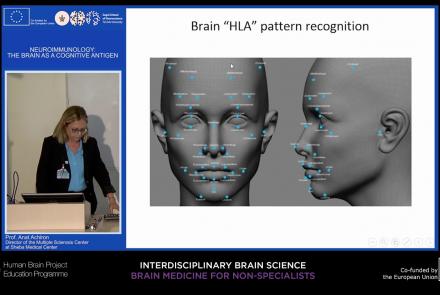
This lecture focuses on how the immune system can target and attack the nervous system to produce autoimmune responses that may result in diseases such as multiple sclerosis, neuromyelitis, and lupus cerebritis manifested by motor, sensory, and cognitive impairments. Despite the fact that the brain is an immune-privileged site, autoreactive lymphocytes producing proinflammatory cytokines can cause active brain inflammation, leading to myelin and axonal loss.
Difficulty level: Beginner
Duration: 37:36
Speaker: : Anat Achiron