
Displaying 938 results
Course:
Question and Answer Session for Asian and Australian participants.
Difficulty level: Beginner
Duration: 1:01:28
Speaker: :
Course:
Question and Answer Session for African and European participants.
Difficulty level: Beginner
Duration: 57:04
Speaker: :

Course:
This lecture focuses on the purpose of model fitting, approaches to model fitting, model fitting for linear models, and how to assess the quality and compare model fits. We will present a 10-step practical guide on how to succeed in modeling.
Difficulty level: Beginner
Duration: 26:46
Speaker: : Jan Drugowitsch

Course:
This lecture summarizes the concepts introduced in Model Fitting I and adds two additional concepts: 1) MLE is a frequentist way of looking at the data and the model, with its own limitations. 2) Side-by-side comparisons of bootstrapping and cross-validation.
Difficulty level: Beginner
Duration: 38.17
Speaker: : Kunlin Wei
Course:
Question and Answer Session for Asian and Australian participants.
Difficulty level: Beginner
Duration: 55:25
Speaker: :
Course:
Question and Answer Session for participants in the Americas.
Difficulty level: Beginner
Duration: 58:14
Speaker: :

Course:
Question and Answer Session for participants in Africa and Europe.
Difficulty level: Beginner
Duration: 44:25
Speaker: :

This lecture provides an overview of the generalized linear models (GLM) course, originally a part of the Neuromatch Academy (NMA), an interactive online summer school held in 2020. NMA provided participants with experiences spanning from hands-on modeling experience to meta-science interpretation skills across just about everything that could reasonably be included in the label "computational neuroscience".
Difficulty level: Beginner
Duration: 33:58
Speaker: : Cristina Savin

This lecture further develops the concepts introduced in Machine Learning I. This lecture is part of the Neuromatch Academy (NMA), an interactive online computational neuroscience summer school held in 2020.
Difficulty level: Beginner
Duration: 29:30
Speaker: : I. Memming Park

Course:
Question and Answer Session for participants in the Americas.
Difficulty level: Beginner
Duration: 45:36
Speaker: :

Course:
Question and Answer Session for participants in Asia and Australia.
Difficulty level: Beginner
Duration: 55:18
Speaker: :
Course:
Question and Answer Session for participants in Africa and Europe.
Difficulty level: Beginner
Duration: 58:56
Speaker: :
This lesson provides an overview of The Virtual Brain integrated workflows on EBRAINS.
Difficulty level: Intermediate
Duration: 32:21
Speaker: : Petra Ritter

This lesson walks users through the Image Processing Pipeline, an integral part of the TVB on EBRAINS integrated workflows.
Difficulty level: Intermediate
Duration: 24:31
Speaker: : Michael Schirner
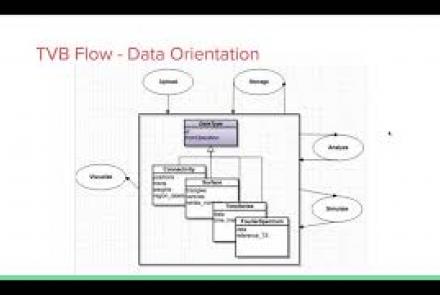
This lesson gives an overview of The Virtual Brain simulator and its integration into the Human Brain Project Cloud and EBRAINS infrastructure.
Difficulty level: Intermediate
Duration: 24:55
Speaker: : Lia Domide
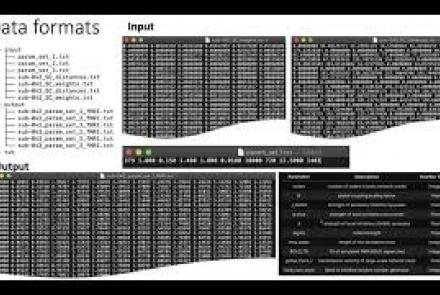
In this lesson, users will get an overview of the EBRAINS integrated Fast TVB, a C implementation of TVB that is orders of magnitude faster than the original Python TVB, and capable of performing parallelizable simulations in the cloud.
Difficulty level: Intermediate
Duration: 8:38
Speaker: : Michael Schirner

In this lesson you will learn about the Bayesian Virtual Epileptic Patient (BVEP), a research use case using TVB supported on the EBRAINS infrastructure.
Difficulty level: Intermediate
Duration: 15:39
Speaker: : Meysam Hashemi

This lesson provides an overview of the process of developing the TVB-NEST co-simulation on the EBRAINS infrastructure, and its use cases.
Difficulty level: Beginner
Duration: 25:14
Speaker: : Denis Perdikis
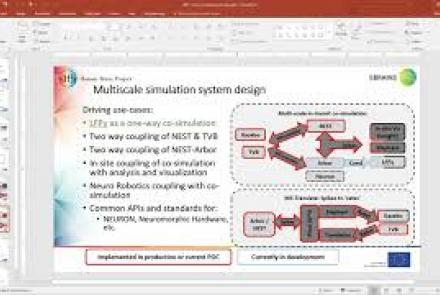
This lesson gives a brief overview of the multi-scale co-simulation between TVB-NEST and Elephant on the EBRAINS infrastructure.
Difficulty level: Intermediate
Duration: 6:05
Speaker: : Wouter Klijn

In this lesson, you will learn about the process of constructing models for TVB automatically on the EBRAINS infrastructure.
Difficulty level: Intermediate
Duration: 23:11
Speaker: : Michiel Van der Vlag and Sandra Diaz