
Lesson type
Difficulty level

Course:
This quick visual walkthrough presents the steps required in uploading data into a brainlife project using the graphical user interface (GUI).
Difficulty level: Beginner
Duration: 2:00
Speaker: :

Course:
This video will document the process of uploading data into a brainlife project using ezBIDS.
Difficulty level: Beginner
Duration: 6:15
Speaker: :

Course:
This short video walks you through the steps of publishing a dataset on brainlife, an open-source, free and secure reproducible neuroscience analysis platform.
Difficulty level: Beginner
Duration: 1:18
Speaker: :
Course:
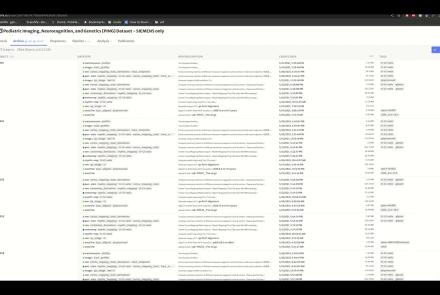
This video will document the process of visualizing the provenance of each step performed to generate a data object on brainlife.
Difficulty level: Beginner
Duration: 0:21
Speaker: :

Course:
This video will document the process of downloading and running the "reproduce.sh" script, which will automatically run all of the steps to generate a data object locally on a user's machine.
Difficulty level: Beginner
Duration: 3:44
Speaker: :

Course:
This video will document the process of creating a pipeline rule for batch processing on brainlife.
Difficulty level: Intermediate
Duration: 0:57
Speaker: :

Course:
This lesson describes and shows four different ways one may upload their data to brainlife.io.
Difficulty level: Beginner
Duration: 6:35
Speaker: :

Course:
This video will demonstrate how to create and launch a pipeline using FreeSurfer on brainlife.io.
Difficulty level: Beginner
Duration: 0:25
Speaker: :

Course:
This short video shows how a brainlife.io publication can be opened from the Data Deposition page of the journal Nature Scientific Data.
Difficulty level: Beginner
Duration: 2:25
Speaker: :

Course:
This video will document the process of importing a dataset archived on OpenNeuro from the Datasets tab into a brainlife project.
Difficulty level: Beginner
Duration: 1:06
Speaker: :
Overview of the evolution of scientific paradigms and the growing role of digital infrastructures in modern neuroscience
Difficulty level: Beginner
Duration: 17:16
Speaker: : Jeanette Hellgren Kotaleski
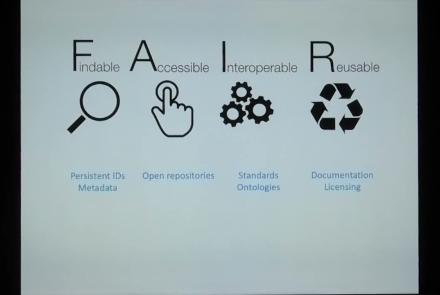
Mathew Abrams, Director of Science & Training at INCF, outlined how INCF and its global community advance standards, software, infrastructure, and education to enable FAIR and open neuroscience.
Difficulty level: Beginner
Duration: 33:20
Speaker: : Mathew Abrams
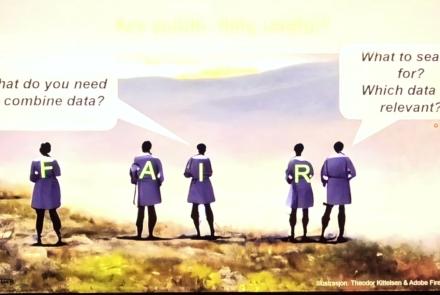
EBRAINS is an open research infrastructure which gathering data, tools and computing facilities for brain-related research. In this lecture, professor Trygve Leergaard will introduce the EBRAINS ecosystem and give overview of services for sharing, finding, and using brain research data. He will provide practical examples of how EBRAINS can add values to neuroscience research projects and explain how researchers can engage and utilize the different resources available
Difficulty level: Beginner
Duration: 41:51
Speaker: : Trygve Leergard
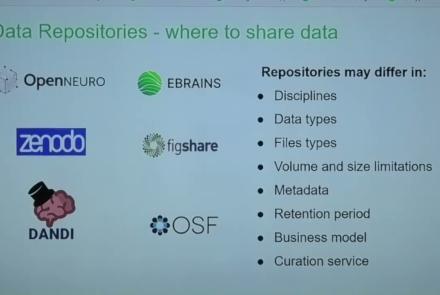
This session introduced EBRAINS data and knowledge services and explained how to achieve impactful data sharing through proper curation, FAIR principles, and secure handling of both non-sensitive and sensitive data.
Difficulty level: Beginner
Duration: 25:48
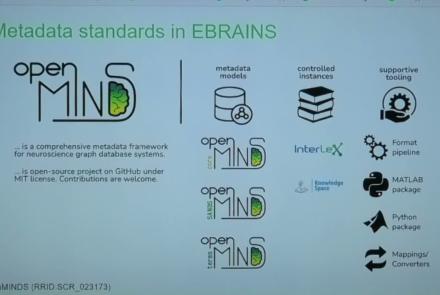
This lesson focused on the importance of organizing data and metadata effectively to ensure that datasets are FAIR and to make data sharing more impactful.
Difficulty level: Beginner
Duration: 14:32

Course:
This video will teach you the basics of navigating the Open Science Framework and creating your first projects.
Difficulty level: Beginner
Duration: 2:11
Speaker: :

Course:
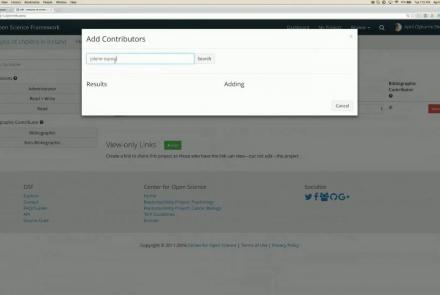
This webinar walks you through the basics of creating an OSF project, structuring it to fit your research needs, adding collaborators, and tying your favorite online tools into your project structure.
Difficulty level: Beginner
Duration: 55:02
Speaker: : Ian Sullivan
Course:
This webinar will introduce how to use the Open Science Framework (OSF) in a classroom setting.
Difficulty level: Beginner
Duration: 32:01
Speaker: : April Clyburne-Sherin

Course:
This lesson provides instruction on how to organize related projects with OSF features such as links, forks, and templates.
Difficulty level: Beginner
Duration: 51:14
Speaker: : Ian Sullivan

This webinar will introduce the integration of JASP Statistical Software with the Open Science Framework (OSF).
Difficulty level: Beginner
Duration: 30:56
Speaker: : Alexander Etz